Quick answer
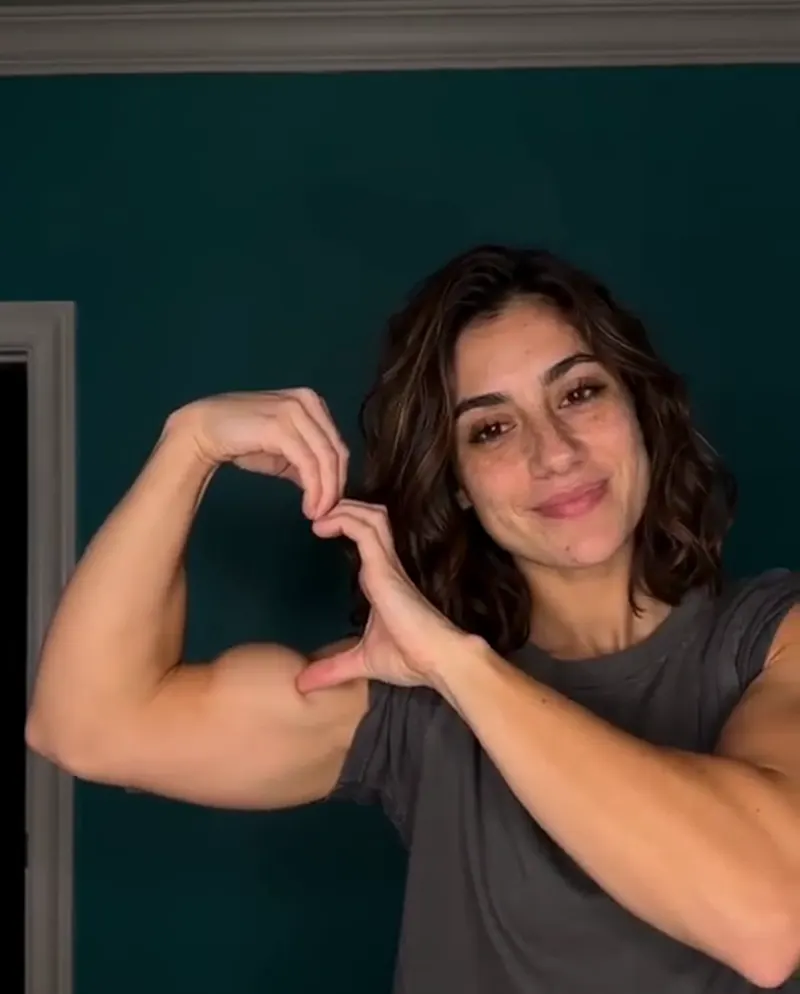
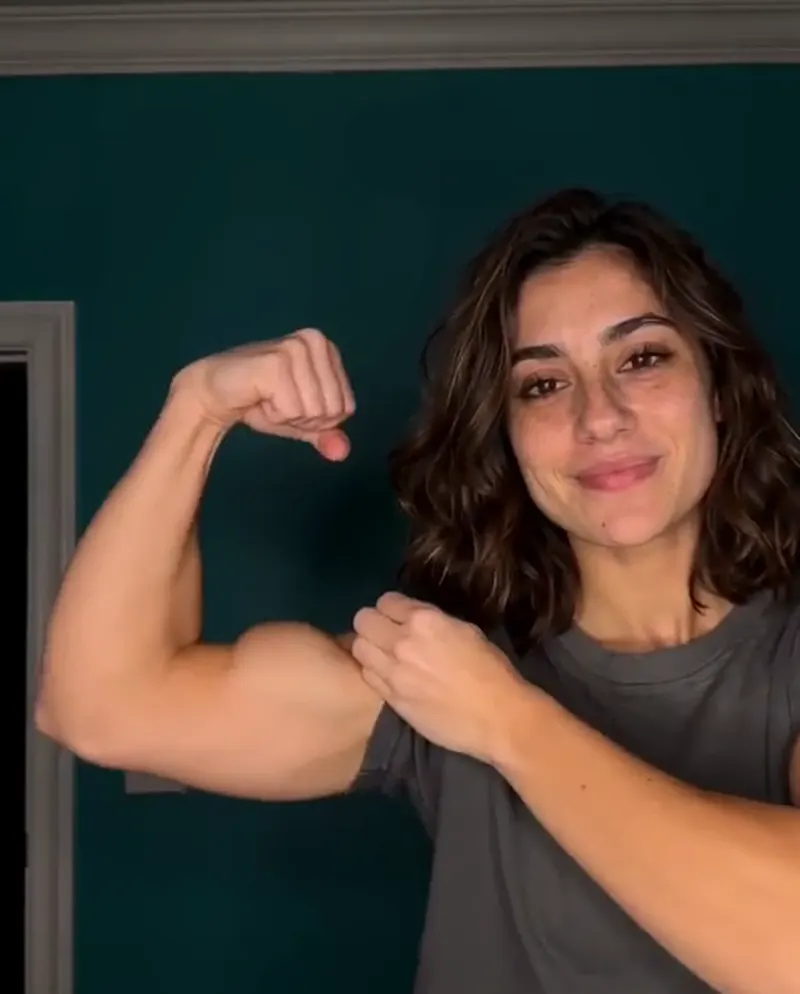
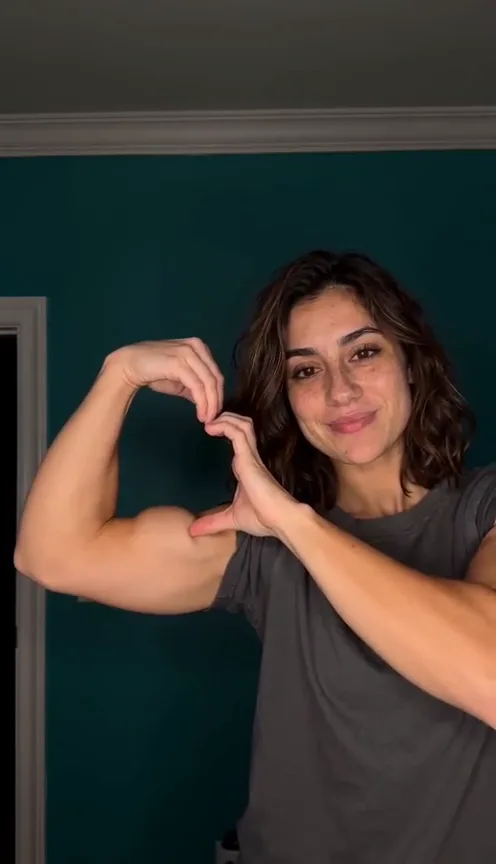
The bicep heart is a flex with a twist: raise one arm into a classic bicep curl, then curl your other hand against the muscle so the hand and the arm close into a heart shape, and hold it with a smile. To make the 7-second trend without filming, upload a selfie to Bicep Heart AI: you get the full pose, timed to the trend’s sound, for 70 credits.
The bicep heart started as a gym joke on X and turned into a TikTok trend at the end of October, under #bicepheart. The format barely changes from one post to the next: a phone propped up in a dim room, someone smiling at it a little too knowingly, a slow build, then the flex and the heart. The on-screen line is usually some version of “have you ever heard of a bicep heart”, and the payoff lands about four seconds in.
Part of the appeal is the meaning. A heart made with a flexed bicep is affection with a wink, somewhere between “I love you” and “look at these arms”, and people send it to partners, friends who just hit a gym goal, or anyone who needs a pick-me-up. You do not need big arms to do it; the shape reads on any build as long as the hand is in the right place.
How to make the bicep heart with your arms
Facing the camera, the whole thing is two arms and three moves. Practise in a mirror first; the hand is where most first attempts go wrong.
- 1Flex: lift one arm out to the side until the upper arm is level with your shoulder, bend the elbow and bring the fist up beside your head, knuckles turned in towards you.
- 2Curl: bring the other arm up across your chest. Bend that wrist and cup the hand, so the heel of the hand and the thumb rest on top of the flexed bicep.
- 3Close: reach the fingertips of the cupped hand up until they touch the raised fist. The curve of the flexed arm makes one side of the heart, the cupped hand the other, and the point sits where your thumb meets the muscle.
If the heart looks like a lump rather than a shape, there is no gap in the middle. Lift the curling elbow a little higher and press only the fingertips to the fist, so you can see the wall through the heart.
 0.5 s
 3.4 s
How the 7 seconds are timed
The trend runs to one sound, and the joke depends on where the heart lands in it. Roughly:
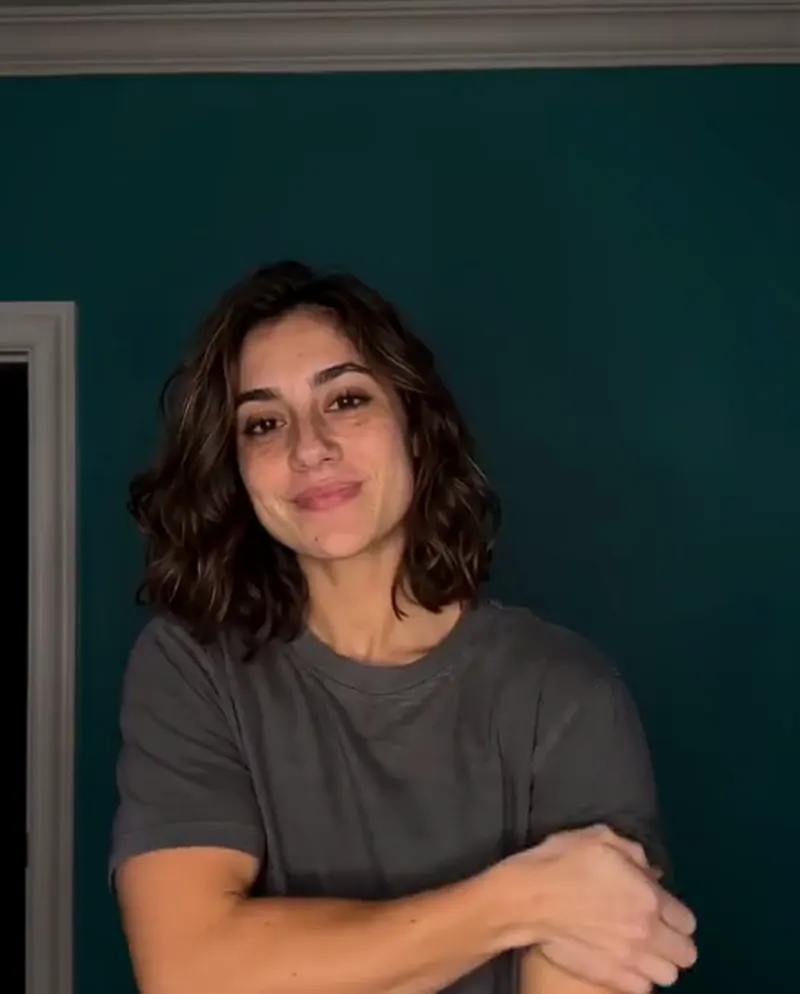
- 0 to 3 s: the slow start. A soft smile and a slight head tilt, arms low or folded, maybe a shoulder rub as if warming up.
- 3 to 3.5 s: the flex goes up.
- About 3.8 to 4.4 s: the free hand curls in and the heart closes.
- 4.4 to 7 s: hold it completely still while the sound swells, with a small tilt of the head and a proud smile.
The most common mistake in home attempts is rushing: the heart is up by second two and then there is nothing left to watch. Let the first three seconds feel almost too long.
Making it from a selfie instead
If you would rather not film yourself flexing, or your arms are not in the mood, the AI version builds the whole clip from one photo of your face. It keeps you, your hair and your build, and puts you in the trend’s own setting: a plain charcoal T-shirt with short sleeves, bare arms, a dim bedroom with a deep teal wall and a white door frame, lit by a warm lamp. The moves follow a reference performance, so the flex and the heart land at the same moments as the trend.
One choice we made on purpose: in the most copied original, the performer’s head slides half out of frame as the arm goes up. Ours keeps your whole face in view the entire time, since your face is the reason to make it.
- 1Go to the Bicep Heart AI page. There is one take: the same moves, room and grey T-shirt for everyone.
- 2One clear photo of you alone, face to the camera. A shoulders-up selfie is fine: the arms and the T-shirt come from the video, not the photo.
- 3The button shows 70 credits for a 7-second vertical video, roughly $4.33 on the smallest pack, before anything starts. New accounts can start with up to 2 videos for $9.90.
- 4Press make and wait a few minutes. A take that fails to finish puts its credits back.
- 5Save the MP4 from Assets. The trend’s sound is already on it, timed so it swells as the heart closes.
Which photo to use
- Face on, eyes to the camera. The video looks straight at you for all 7 seconds, so a side profile has to be guessed.
- Your own hair, down or up the way you want it. The hair in the video follows the photo.
- No sunglasses or hat unless you want them in the video.
- Clothes do not matter: whatever you wear in the photo, a hoodie included, is swapped for the short-sleeved grey tee so the bicep shows.
- Just you. Crop friends and partners out; the take has room for one person.
For more on choosing a photo for any trend, see the photos that work best for AI video.
Common problems
My heart looks like a fist on an arm
The cupped hand is resting flat on the muscle. Only the heel of the hand and the thumb should touch the bicep; the fingertips arch up to meet the fist.
My face gets cut off when I flex
You are too close to the phone. Prop it at chest height and step back until there is space above your raised fist.
The arm in the AI video looks stronger than mine
The flex follows a reference performance and adapts to your photo. A photo where your shoulders and build show, rather than a tight face crop, keeps the arms closer to your own.
The sound plays twice after posting
The sound is already in the file. If you add the trend sound in TikTok to get listed under it, set its volume to zero.
FAQ
What does the bicep heart mean?
It is a heart sign made with a flexed arm: affection with a bit of showing off. People send it to partners and friends, or post it as a playful flex.
Where did the bicep heart trend come from?
It began as a gym joke on X and spread on TikTok from late October under #bicepheart, on one original sound, with the line “have you ever heard of a bicep heart”.
Do I need big arms to do the bicep heart?
No. The heart comes from the curve of the bent arm and the cupped hand, so it reads on any build as long as there is a gap in the middle.
Can I make a bicep heart video with my dog or cat?
Not with this template. A paw cannot make the heart, so the AI version is for people only.
How much does the Bicep Heart AI video cost on Reelfie?
On Reelfie (reelfie.app) one 7-second bicep heart video costs 70 credits, about $4.33 on the smallest pack. The price shows before you start, and a failed render is refunded.
Make your first one
Bicep Heart AI: A flex that says I love you.
Try Bicep Heart AIYour photos are deleted 7 days after upload and never used to train AI.